

Smartwatch for Jogging: How to Choose the Right Running Partner in 2026
Key Takeaways
- A solid jogging smartwatch in 2026 needs accurate GPS, a bright AMOLED display readable in sunlight, and at least 15–20 hours of GPS battery life for consistent training.
- Reebok smartwatches (Icon and Pulse) deliver multi-day battery life up to 10 days, IP68 water resistance, and 24/7 health tracking—making them accessible alternatives to premium running watches.
- All Reebok watches sync seamlessly with Google Fit and Strava while working across both Android and iOS via the Reebok Connect app.
- This guide focuses on casual to serious joggers who want performance and motivation without paying Apple Watch Ultra 3 or Garmin Fenix prices.
- GPS tracking, heart rate monitoring, and smart notifications have become table-stakes features in 2026—what matters now is finding the right balance of battery, comfort, and price for your running style.
Jogging in 2026 is a data-driven activity. Gone are the days of guessing your pace or wondering how far you actually ran around the neighborhood. A smartwatch for jogging now replaces your stopwatch, phone apps, and even some of your running gear by putting real-time metrics directly on your wrist.
But with dozens of options flooding the market—from budget fitness trackers to $800 adventure watches—finding the right GPS running watch can feel overwhelming. This guide cuts through the noise to help you identify exactly what features matter for your jogging routine, how to set up your watch properly, and why you might not need those ultra-premium features after all.
Why a Smartwatch Is a Game-Changer for Jogging
Modern jogging has evolved beyond simply lacing up and hitting the pavement. Today’s runners rely on metrics to improve performance, prevent injury, and stay motivated through those early morning runs. A smartwatch transforms your jog from a guessing game into a structured training session.
Here’s what makes a running watch essential in 2026:
- GPS tracking improves pacing by showing real-time pace, distance, and splits directly on your wrist. Instead of wondering if you’re running too fast or too slow, you see exact numbers that help you maintain consistent effort across every kilometer.
- Heart rate monitoring keeps you in safe zones, which is especially valuable for beginners returning to running after a break. Training at the right intensity reduces injury risk and builds aerobic fitness more efficiently than random hard efforts.
- Motivation features like audio and vibration alerts, daily step goals, streaks, and in-app badges turn solitary jogs into engaging challenges. The Reebok Connect app, for example, tracks your consistency and celebrates milestones to keep you accountable.
- Hands-free jogging replaces the phone-in-hand experience. With Bluetooth calling and smart notifications on your wrist, you can leave your phone in your pocket or armband and still catch important calls without breaking stride.
- Accessible pricing puts serious metrics within reach. While Garmin watches and Apple Watch models dominate headlines, Reebok offers similar core jogging metrics at a fraction of the cost—making data-driven running available to everyone, not just gear enthusiasts.
The bottom line: a smartwatch doesn’t just track your runs—it actively helps you become a better, more consistent jogger.
Key Features to Look For in a Jogging Smartwatch
Not all running watches are created equal. Understanding which features actually matter for jogging—and which are overkill—helps you avoid overspending on capabilities you’ll never use.
GPS Quality
GPS accuracy determines how reliably your watch tracks distance and pace. Here’s what to know:
- Single-band GPS uses one satellite frequency and works well for most city parks, suburban routes, and open areas. This is what Reebok watches use, optimized for reliable tracking workouts without excessive battery drain.
- Dual band GPS (or multi band GPS) uses two frequencies for better accuracy in challenging environments like dense forests, urban canyons, or heavy tree cover. Premium watches like the Garmin Forerunner 970 include this technology.
- For typical city jogging, standard GPS mode provides good GPS accuracy. Save your money unless you regularly run through areas with satellite signal challenges.
Battery Life
Battery anxiety kills motivation. A running watch that dies mid-run or requires daily charging quickly becomes a burden.
- For joggers running 3–4 times per week at 45–60 minutes per session, aim for at least 10 days standby or 15+ hours of GPS battery life.
- The Reebok Icon delivers up to 10 days in smartwatch mode with mixed use, meaning you can charge once weekly even with regular training.
- Compare this to the Apple Watch Series 11, which offers only 8 hours with all-systems GPS—requiring near-daily charging for active joggers.
- Long battery life means you never worry about whether your watch will last through a training session, and great battery life means you can track sleep, stress, and activity around the clock without constant recharging.
Display Technology
Your display needs to be readable at a glance while you’re moving and sweating:
- AMOLED displays offer vibrant colors, deep blacks, and excellent readability. Most 2026 running watches—including Reebok models—feature a bright AMOLED display that stays readable in bright sunlight and dims automatically during night jogs.
- Transflective (MIP) displays found on older watches like the Garmin Forerunner 255 reflect ambient light for visibility but lack the crisp visuals of AMOLED.
- An always on display helps you check metrics without raising your wrist, though it does consume more battery.
- Look for a brighter screen if you primarily jog during midday or in direct sunlight.
Health Sensors
Beyond running metrics, modern fitness watches track your overall wellness:
- 24/7 heart rate monitoring establishes your baseline and tracks recovery between runs
- SpO₂ spot checks measure blood oxygen levels
- Sleep tracking with sleep stages helps you understand recovery quality
- Stress tracking alerts you when accumulated fatigue might require a rest day
These health metrics help joggers avoid overtraining by providing health insights beyond just workout data.
Workout Modes
Running-specific modes make tracking workouts seamless:
- Outdoor Run mode activates GPS tracking and displays pace, distance, time, and heart rate
- Treadmill mode uses accelerometer data when GPS isn’t available
- Interval mode lets you program work/rest periods with vibration cues
- Auto-lap automatically marks each kilometer or mile
- Auto-pause stops the timer when you wait at traffic lights
Comfort and Build
A watch you wear 3–5 hours per week during exercise needs to feel invisible:
- Keep weight under 45–55 grams for jogging comfort—lighter watches cause less wrist fatigue and bounce
- Durable zinc alloy cases withstand accidental drops on pavement
- Soft silicone straps won’t irritate skin during sweaty summer runs
- Quick-release straps allow easy cleaning and style changes
Smart Features
The right smartwatch features reduce your dependency on pulling out your phone:
- Smartphone notifications (calls, messages) displayed on your wrist
- Bluetooth calling for answering urgent calls without stopping
- Music control for Spotify, YouTube Music, or Apple Music playback
- Voice assistant access through your connected phone
Compatibility
Your watch should fit your existing tech ecosystem:
- Android and iOS support ensures you’re not locked into one phone brand
- Strava and Google Fit syncing lets you maintain long-term training logs across platforms
- Third party apps extend functionality beyond the native experience
Reebok Smartwatches for Jogging
Reebok Connect represents Reebok’s dedicated smartwatch division, launched to give runners serious training features without premium prices. The focus is accessible performance and motivation over perfection—designed for everyday joggers who want all the features that matter without all the features they’ll never use.
Reebok Icon
Released in 2025, the Icon targets joggers who want comprehensive tracking:
- Up to 10 days battery life in smartwatch mode
- Bright AMOLED display readable in direct sunlight
- Built-in GPS for accurate tracking without phone dependency
- 100+ sport modes including outdoor run, treadmill, and intervals
- Bluetooth calling directly from your wrist
- Priced around $159
Reebok Pulse
Released late 2024, the Pulse offers a lighter, more affordable entry point:
- Up to 7 days battery life
- IP68 water resistance for sweat and rain protection
- Outdoor and treadmill run modes with essential metrics
- Compact design for smaller wrists
- Priced around $119
Shared Health Tracking Features
Both models include:
- Continuous heart rate monitoring around the clock
- SpO₂ spot checks for blood oxygen measurement
- Sleep stage tracking (light, deep, REM) with sleep score
- Stress tracking visible in the Reebok Connect app
- Body battery style energy management
App Ecosystem
The Reebok Connect app serves as your training hub:
- View detailed run data including pace charts, heart rate zones, and splits
- Auto-share completed runs to Strava and Google Fit
- Set goals and track weekly/monthly progress
- Access training analysis without switching between multiple apps
- Compatible with both Android and iOS
Value Comparison
How does Reebok smartwatches stack up against alternatives?
Feature | Reebok Icon | Garmin Forerunner 165 | Amazfit Active Max |
|---|---|---|---|
Price | ~$159 | ~$250+ | ~$170 |
Battery (Smartwatch) | Up to 10 days | ~11 days | Up to 25 days |
GPS Battery | 15+ hours | ~19 hours | ~64 hours |
Display | AMOLED | AMOLED | AMOLED |
Strava Sync | Yes | Yes | Yes |
The Reebok Icon delivers similar core jogging metrics at a lower price while maintaining multi-day battery—a sweet spot for joggers who don’t need extreme endurance features.
Which Model Fits Your Profile?
- New jogger (2–3 short runs per week): Reebok Pulse offers all essential metrics at a reasonable price
- 5K–10K runner training for events: Reebok Icon provides better display, more training tools, and stronger battery
- All-round fitness fan mixing jogging, gym, and cycling: Icon’s 100+ sport modes cover diverse activities
Setting Up Your Smartwatch for Jogging
Getting from unboxing to your first tracked jog takes under 15 minutes with most modern watches. Here’s how to optimize setup for running:
Initial Pairing
- Download the Reebok Connect app on your Android or iOS device before powering on the watch
- Enable Bluetooth on your phone and follow the in-app pairing prompts
- Typical pairing completes in 1–2 minutes with automatic firmware updates
Personal Data Entry
Enter accurate information to improve tracking:
- Age, weight, and height affect calorie calculations
- Maximum heart rate estimate (220 minus your age as a starting point) enables accurate heart rate zones
- Activity level helps calibrate daily goals
Customizing Run Screens
Configure what you see during jogs:
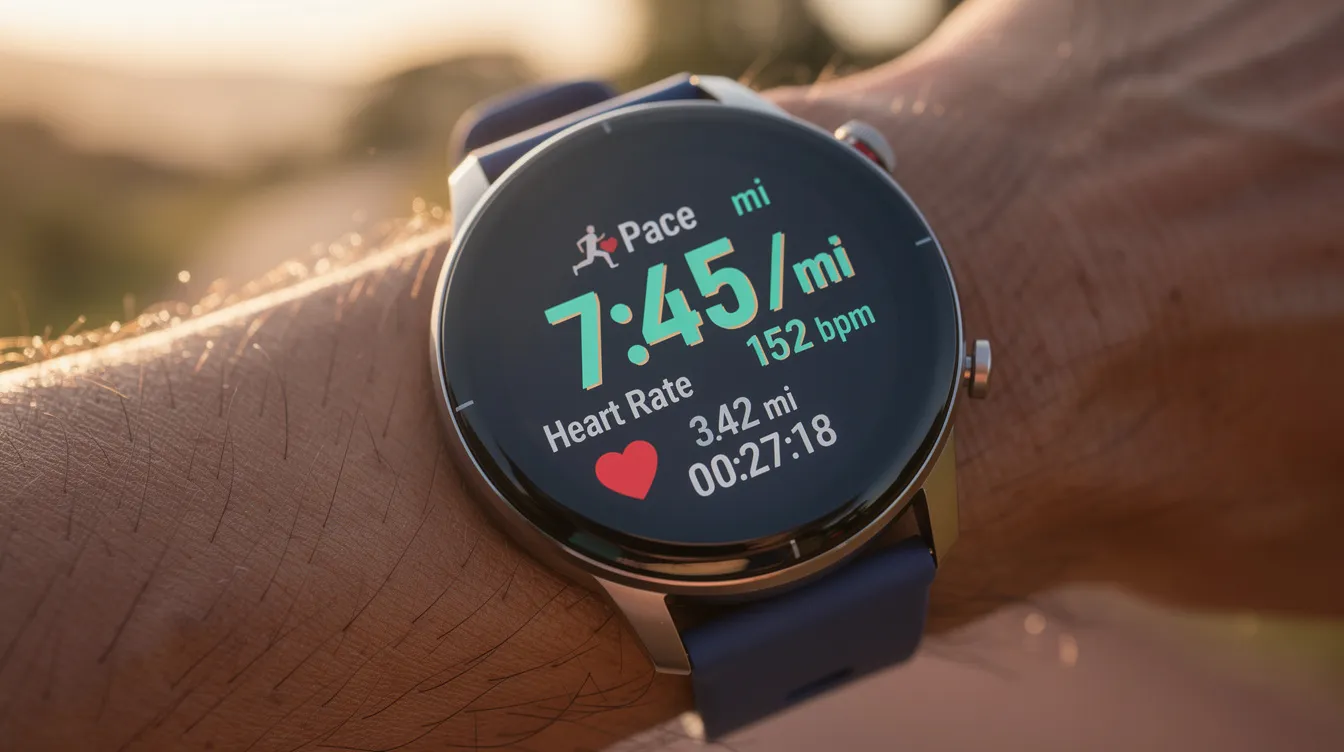
- Essential fields: current pace, total distance, elapsed time, heart rate
- Secondary fields: lap pace, average pace, cadence
- Keep 3–4 fields per screen for readability while moving
- Too many metrics become unreadable mid-stride
GPS Configuration
- Enable GPS-only mode for everyday runs to maximize battery
- GPS + GLONASS or GPS + Galileo improves accuracy in challenging terrain but drains power faster
- For city and park jogging, standard GPS mode typically provides enough battery and sufficient accuracy
Safety Features
Configure available safety options:
- Emergency contact notification via connected phone
- Share live location during runs (where supported)
- Fall detection through phone ecosystem integration
Pre-Run Sync
Before your first jog:
- Connect Strava and Google Fit accounts in the Reebok Connect app
- Enable auto-sync so runs upload automatically when you finish
- Verify the connection by checking that your profile appears in third-party apps
This one-time setup ensures no run data gets lost and your training log stays complete.
How to Use a Smartwatch to Improve Your Jogging
A smartwatch does more than record—it actively guides better training. Here’s how to leverage your watch for meaningful improvement during weekday jogs.
Heart Rate Zone Training
Heart rate accuracy transforms random jogs into structured workouts:
- Zone 2 (60–70% max HR) builds aerobic base and burns fat efficiently. This feels conversational—you should be able to speak in full sentences.
- Use your watch’s zone alerts to stay within target ranges
- Beginners often run too hard; watching heart rate prevents burning out early in runs
- A chest strap provides marginally better heart rate accuracy during sprint intervals, but wrist-based optical sensors work well for steady jogging
Interval Training
Interval mode eliminates the need for phone timers:
- Program work/rest periods (e.g., 1 minute faster, 1 minute easy)
- The watch vibrates at each transition so you can focus on running
- Structured workouts like 4x400m intervals improve speed more efficiently than random fartleks
- Many watches support training plans with pre-built interval sessions
Cadence Monitoring
Cadence (steps per minute) helps improve form:
- Most efficient runners maintain 170–180 steps per minute
- Watching cadence helps identify overstriding, which causes braking forces and injury risk
- Reebok smartwatches models display cadence on customizable run screens
- Gradual cadence increases (5–10 steps per minute) over weeks reduce impact stress
Weekly Progress Tracking
The Reebok Connect app provides training analysis to guide goal-setting:
- Review total weekly distance, average pace, and time in each heart rate zone
- Set realistic targets like “jog 15 km per week by June 2026”
- Track training load to avoid sudden volume spikes that cause injury
- Compare current performance against previous months
Recovery Integration
Smart training means knowing when to rest:
- Use sleep score and stress tracking to assess recovery
- High stress + poor sleep = take an easy day instead of forcing a hard workout
- Morning report features (where available) suggest daily training readiness
- Recovery insights help prevent burnout and overtraining
Periodic Reviews
Every 4 weeks, assess your training log:
- Are you consistently hitting weekly targets?
- Is average pace improving or plateauing?
- Do any workouts consistently feel too hard or too easy?
- Adjust goals in the app based on actual progress, not wishful thinking
Battery Life, Durability, and Water Resistance for Joggers
If you jog 3–5 times per week, you need a watch that keeps up without constant charging. These three factors determine whether your watch is a helpful tool or a frustrating gadget.
Realistic Battery Expectations
- Casual joggers (3–4 runs weekly, 30–45 minutes each): Look for at least 5–7 days of battery life between charges
- Reebok Icon: Up to 10 days with mixed use (24/7 tracking plus regular GPS runs)
- Fast charging: Models that reach 0–80% in under an hour let you top up quickly if you forget to charge
- Good battery life means never worrying about your watch dying mid-run
GPS Drain Considerations
GPS mode consumes significantly more power than smartwatch mode:
- A 45-minute GPS run uses roughly 3–5% of a multi-day battery
- Training for a 10K or half marathon with 5+ runs weekly depletes battery faster
- Watches with enough battery (15+ hours GPS) handle serious training blocks without daily charging
- The Garmin Enduro series prioritizes extreme GPS battery for ultra-distance runners—overkill for most joggers
Build Durability
Your watch faces jogging-specific hazards:
- Zinc alloy or aluminum cases survive drops on pavement
- Strengthened glass (Gorilla Glass or equivalent) resists scratches from brush or equipment
- Sweat exposure tests seals and coatings daily during summer months
- Titanium bezel watches like the Huawei GT Runner 2 offer premium durability at higher price points
IP68 Water Resistance
IP68 means your watch handles:
- Heavy sweat during intense runs
- Jogging in rain or through puddles
- Post-run showers and handwashing
- Brief submersion (1.5 meters for 30 minutes)
It does not mean:
- Deep-water diving or extended swimming
- Hot tub or sauna use
- Exposure to high-pressure water jets
For lane swimming or triathlon training, verify specific swim profile support in each model’s specs.
Strap Hygiene
Silicone straps absorb sweat and can develop odors:
- Quick-release designs allow easy removal for cleaning
- Rinse straps after sweaty summer runs
- Replace straps every 6–12 months with heavy use
- Consider having a dedicated “running strap” separate from your everyday band
Smart Features That Matter When You’re Jogging
Not every smartwatch feature helps during a 30–60 minute jog. Focus on what actually improves the running experience.
Smartphone Notifications
Selective notifications reduce distraction:
- Enable only calls and messages from important contacts
- Disable social media and email alerts during runs
- Reebok Pulse and Icon customizable notification filters let you choose exactly what buzzes your wrist
- Smart notifications that show sender name help you decide whether to pause
Bluetooth Calling
Taking calls from your wrist works in specific situations:
- Answering briefly on a quiet path without fumbling for your phone
- Quick check-ins that don’t require stopping
- Confirming you’re running late without breaking stride
Bluetooth calling requires your phone nearby—these watches don’t include cellular radios.
Music Control
Control playback without touching your phone:
- Skip tracks, adjust volume, pause/play from your wrist
- Works with Spotify, YouTube Music, Apple Music, and most streaming apps
- Keep your phone secured in a pocket or belt while running
Voice Assistant Access
Where supported through your connected phone:
- Start timers for interval training
- Send quick voice texts during cool-down walks
- Check weather before heading out
Everyday Smartwatch Roles
Beyond running, smartwatch features support active lifestyles:
- Calendar reminders for scheduled workouts
- Alarms for early morning run motivation
- Sedentary alerts that prompt movement throughout the day
- Watch face customization for quick metric access
Choosing the Right Smartwatch for Your Jogging Style and Budget
Not every jogger needs ultra-premium adventure watches like the Garmin Fenix 8 or Coros Vertix 2S. In fact, most runners never touch 80% of the features in a $600+ GPS watch.
Three Jogger Profiles
Profile 1: New Jogger
- 2–3 short runs per week
- Primary goal: build consistency
- Needs: basic GPS, heart rate, simple data screens
- Best fit: Reebok Pulse
Profile 2: 5K–10K Runner
- Training for events 3–4 times weekly
- Primary goal: improve times
- Needs: interval modes, training analysis, reliable GPS
- Best fit: Reebok Icon
Profile 3: All-Round Fitness Fan
- Mixing jogging with gym, cycling, swimming
- Primary goal: track diverse activities
- Needs: multiple sport modes, cross-training metrics
- Best fit: Reebok Icon for great value across activities
Budget Ranges in 2026
Price Range | What You Get |
|---|---|
$100–$130 | Basic GPS, heart rate, 5–7 day battery, essential run metrics |
$130–$180 | AMOLED display, 10+ day battery, more sport modes, better training features |
$180–$250 | Advanced training analysis, larger displays, premium materials |
$250–$400 | Training status, recovery metrics, more satellite systems |
$400–$600+ | Offline maps, multi-band GPS, extreme durability, off course alerts |
Avoid Overbuying
Many joggers purchase $500+ outdoor watches and never use:
- Offline maps (unnecessary for familiar city routes)
- Climb planning tools
- Expedition-grade battery modes
- Polar Grit or Suunto Race level durability
If you’re jogging neighborhood loops and local parks, these features represent wasted spending.
Priority Features
When evaluating options, rank these first:
- Comfort during actual running (weight, strap feel)
- Display readability at a glance (bright enough for your typical conditions)
- Battery lasting through your training week
- Core metrics you’ll actually use (pace, distance, heart rate)
Save advanced features like training readiness scoring and structured workouts coaching for when you’ve outgrown basic tracking.
How Reebok Smartwatches Compares to Big-Name Running Watches
This isn’t a lab benchmark—it’s a practical comparison for joggers who want great features without paying flagship prices.
Price Positioning
Where Reebok smartwatches sits in the 2026 market:
Watch | Price | Best For |
|---|---|---|
Reebok Pulse | ~$139 | Budget-conscious new joggers |
Reebok Icon | ~$119 | Regular joggers wanting value |
Amazfit Active Max | ~$170 | Long battery, many modes |
Coros Pace 4 | ~$250 | Serious runners, coros watches ecosystem |
Garmin Forerunner 165 | ~$250+ | Garmin ecosystem fans |
Google Pixel Watch | ~$350 | Google integration priority |
Apple Watch Series 10/11 | ~$400+ | iPhone users, smartwatch-first approach |
Garmin Forerunner 970 | ~$750 | Best running watch, all features |
Apple Watch Ultra 3 | ~$800 | Premium Apple ecosystem |
Battery and GPS Trade-offs
Premium devices offer extreme capabilities:
- Garmin Forerunner 970: 15 days smartwatch, 21 hours dual-band GPS
- Apple Watch Ultra 3: Best smartwatch features but only 8 hours GPS
Reebok smartwatches prioritizes:
- Core jogging metrics without complexity
- Multi-day battery at a lower price
- Enough battery for weekly training without daily charging
For most joggers running 3–4 times weekly on familiar routes, this approach delivers better value.
Ecosystem Approach
Reebok Connect leans on established platforms:
- Syncs to Strava and Google Fit automatically
- No proprietary data silo locking you in
- Easy switching if you change watches later
Compare to Garmin Connect or Apple Health, which encourage ecosystem lock-in.
The “Accessible Performance” Philosophy
Reebok smartwatches emphasizes motivation over perfection:
- Metrics accurate enough for improvement, not laboratory precision
- Features that everyday joggers actually use
- Price points that don’t require justification
Small imperfections in metrics are acceptable for joggers not chasing Olympic qualifying times.
When Premium Makes Sense
A few watches remain necessary for specialized needs:
- Ultra-trail navigation: Offline maps and best GPS accuracy through technical terrain
- Multi-day mountain races: Extreme battery, altitude metrics, weather data
- Triathlon racing: Seamless transition tracking, open-water swim accuracy
Most city and suburban joggers never encounter these requirements. For running loops around your neighborhood, local parks, and nearby trails, Reebok smartwatches delivers everything you need.
Frequently Asked Questions
Can I jog without my phone if I use a Reebok Connect smartwatch?
Yes—Reebok watches include built-in GPS, so pace, distance, and route are recorded independently without your phone present. Your run data syncs to the app when you return and reconnect via Bluetooth.
However, notifications, Bluetooth calling, and music streaming/control still require your phone to be nearby. As of 2026, Reebok smartwatches do not include cellular/LTE radios, so they can’t make calls or receive messages independently.
Is IP68 water resistance enough for running in heavy rain and sweat?
IP68 provides solid protection for jogging conditions. In practical terms, it means your watch handles heavy rain, significant sweat exposure, handwashing, and brief submersion (1.5 meters for 30 minutes). The seals keep dust and water out during normal training.
For lane swimming or triathlon open-water use, check each specific model’s swim profile support. Some watches have dedicated swim modes tested beyond basic IP68 standards. Casual post-run showers are completely fine for any IP68-rated device.
How accurate is smartwatch heart rate for jogging compared to a chest strap?
Modern optical sensors (like those in 2024–2026 Reebok models) provide accuracy sufficient for steady-state jogging. They may lag slightly during sudden sprints or rapid intensity changes, where a chest strap maintains an edge.
For best accuracy, wear your watch snugly about a finger-width above your wrist bone. Avoid very loose straps, which allow the sensor to shift and lose skin contact. For zone-based easy running, wrist sensors work well; for detailed interval training data, serious athletes may prefer a chest strap.
How often should I charge a Reebok smartwatch if I jog 3–4 times per week?
With 30–45 minute GPS runs 3–4 times weekly plus 24/7 health tracking, most users can charge:
- Reebok Icon: Once every 7–10 days
- Reebok Pulse: About once per week
A simple routine: charge while showering or making breakfast once weekly. This prevents ever running out of battery before a planned jog.
Do I need advanced features like offline maps or dual-band GPS for city jogging?
For typical city parks, pavements, and suburban routes, standard GPS (like Reebok watches use) provides accurate tracking for distance and pace. You won’t miss dual-band GPS unless you regularly run through areas with significant satellite signal challenges.
Offline maps become useful only when exploring unfamiliar trail networks, dense forests, or canyons where you might need turn-by-turn navigation. New watches with these features cost significantly more. If you’re jogging familiar routes 95% of the time, save your money for other watches that match your actual needs.
Finding the right smartwatch for jogging doesn’t require emptying your wallet—it requires matching features to your actual running habits. Start with what matters most: reliable GPS, a readable display, and enough battery life to keep up with your weekly training.
Whether you’re building a base, training for your first 5K, or just trying to stay consistent with morning jogs, the right watch supports your goals without overwhelming you with features you’ll never use. Reebok smartwatches delivers the core metrics serious joggers need at price points that make data-driven running accessible to everyone.
Ready to upgrade your running routine? Explore the Reebok smartwatch lineup and find the model that matches your jogging style.
